
What Is Digital Transformation For Business Success
Learn what is digital transformation and get actionable steps to modernize operations, boost efficiency, and drive sustainable business growth.Digital Transformation often conjures images of futuristic offices and sleek gadgets. In reality, it’s about weaving digital capabilities into every corner of your organization. Think of it as renovating an aging home—pulling out old wiring and dim light switches, then installing smart bulbs and connected thermostats that you control from your phone.
Quick Answer To Digital Transformation
When you hear “digital transformation,” picture a company replacing manual processes with digital ones, reshaping both operations and customer experiences. In the past ten years, investment in these initiatives has surged, hitting $1.6 trillion in 2022 and on track for $2.8 trillion by 2025. For a closer look at those spending trends, see Repordermanagement’s statistics.
Here’s what these upgrades deliver:
- Cost Savings: Tasks that once required hours of manual input become instant.
- Greater Agility: Teams adjust offerings on the fly as market needs shift.
- Data as Fuel: Analytics drive decisions—from customer outreach to supply chain tweaks.
- Fresh Revenue Channels: Digital products open doors to new customer segments.
Home Renovation Analogy
Below is a snapshot from Wikipedia that illustrates the three essentials—people, process, and technology.
Before we unpack each pillar, here’s a concise summary:
Digital Transformation Pillars Summary
This quick-reference table outlines each core pillar, its definition, and the impact on business operations.
| Pillar | Description | Business Impact |
|---|---|---|
| People | Shifting culture and building skills | Boosts collaboration and sparks new ideas |
| Process | Designing and automating workflows | Accelerates delivery and reduces waste |
| Technology | Implementing digital tools | Elevates customer experiences |
These three pillars form the backbone of any successful initiative. Aligning culture, workflows, and tools creates a clear path forward.
To learn how to chart that path, check out our guide on crafting effective roadmaps in What Is a Product Roadmap.
Why Digital Transformation Matters
- Stay ahead of competitors by improving customer interactions and internal systems. For example, a regional restaurant chain launched a mobile ordering app and saw sales jump 30% in three months.
- Build resilience so operations continue smoothly when disruptions hit, such as using cloud backups to reduce downtime by 50% during outages.
- Create a playground for innovation where teams prototype digital offerings rapidly, like piloting a chatbot in customer service to cut response times in half.
Next, we’ll dive into digital maturity models and how to put the customer front and center in every initiative. Stay tuned!
Understanding Key Concepts
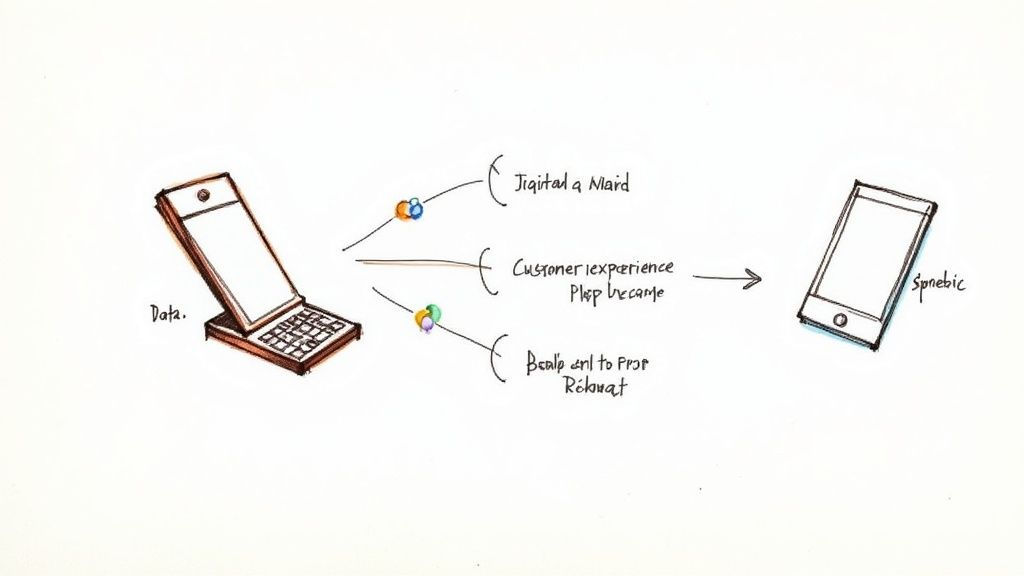
Think of digital transformation as more than swapping old tools for new ones—it’s reshaping how a business thinks and acts. Imagine moving from a flip phone to a smartphone. Suddenly, you’re not just calling people; you’re navigating apps, tracking data and unlocking unexpected features.
In this shift, data stops being a side note and becomes a strategic asset steering every choice. Equally important is changing mindsets, not just installing software.
"Digital maturity shapes the pace at which organizations adapt and thrive."
Here are three pillars to keep in view:
- Digital Maturity indicates how ready and capable your teams are for change.
- Business Model Innovation tweaks revenue streams and core operations.
- Customer Experience takes center stage, guiding products and services.
These concepts turn abstract goals into concrete steps, linking big-picture vision to everyday action.
Exploring Business Model Innovation
Experimenting with new ways to make money can begin in a garage—or a back office—and then skyrocket. Picture a traditional taxi firm that launches a rideshare app charging per trip rather than per hour.
Small tests, backed by real-time data, can lead to big wins:
- Rapid pilot programs that evolve based on usage patterns
- Digital channels that lift sales by 24% in just a few months
- Niche offerings reaching entirely new audiences
For instance, a neighborhood bookstore might roll out a subscription box, pairing curated novels with exclusive author interviews. The result? Steady recurring income and deeper customer connections.
Centering Customer Experience
Every interaction is a chance to impress—or frustrate—someone. Consider replacing a printed manual with an interactive online guide. Add short videos to tackle common hiccups, and suddenly your support tickets plunge.
At the same time, chatbots can answer routine questions around the clock, letting your team focus on more complex issues. The result: fewer pain points and happier users.
- 73% of users say they favor self-service when it’s clear and simple.
- Instant feedback loops help you refine each step of the journey.
- Quick, iterative updates keep the experience fresh and on target.
Building A Digital First Culture
When experimentation and teamwork sit at the heart of your culture, ideas move quickly from whiteboard to live product. Many companies run internal hackathons, giving small teams a few days to prototype new features. Leaders celebrate curiosity and treat failures as learning opportunities. This kind of support often becomes the secret ingredient behind rapid adoption of digital tools.
Strengthening Data As A Core Asset
Scattered spreadsheets give way to a central data warehouse. Dashboards update in real time, so anyone can spot trends and act without waiting for a monthly report. For instance, a retailer replaced four separate sheets with a unified dashboard, cutting monthly reporting time from two days to a few hours. A clear data governance policy ensures quality stays high and compliance is met.
Read our guide on integrating seamless workflows with third parties through smart APIs like this one.
Learn more about integrating third party APIs in our development guide to API for Third Party Integration
Actionable Tips For Key Concepts
- Run a digital maturity assessment with scorecards and surveys to uncover weak spots.
- Host a business model workshop to brainstorm fresh revenue ideas.
- Map out the customer journey to spot both friction and delight.
- Assemble a cross-functional squad empowered to test new digital tools.
These steps bridge the gap from theory to practice, setting the stage for real progress.
Next, we’ll explore the nuts and bolts of cloud solutions, AI and automation. Keep these core ideas in mind as you move forward—your path to transformation starts here.
Key Components Of Digital Transformation
Digital transformation demands more than a single tool—it’s an intricate system where each part supports the others. To grasp its full power, you need to look at both the technical pillars and the organizational enablers.
Here are the main components driving a successful shift:
- Cloud Computing delivers on-demand infrastructure that grows or shrinks with your needs.
- Artificial Intelligence (AI) turns heaps of data into forward-looking insights.
- Internet of Things (IoT) attaches sensors and devices to workflows for instant feedback.
- Automation offloads routine work to software bots, freeing people for creative tasks.
- Governance and Talent establish the right policies, skills, and culture to make change stick.
Core Technology Building Blocks
Imagine the cloud as a flexible power grid—no hardware invoices, just instant access to compute and storage. A small startup can spin up servers in minutes instead of waiting weeks for procurement.
Serverless platforms like AWS Lambda remove the need to manage servers at all, making it easy to spin up functions for specific tasks. Consider running a proof-of-concept on AWS Lambda to measure potential 40% operational effort reduction in your environment.
AI engines work like digital prospectors, sifting through millions of records to expose patterns. In factories, this capability can shrink unplanned downtime by 30% through predictive maintenance.
Natural language processing fuels chatbots and virtual agents, speeding replies by 50%. One financial services firm saw support tickets drop after automating basic customer queries.
IoT setups weave sensors into machines and trucks, turning them into constant data streams. Automation uses those feeds to trigger restocking or quality checks in real time. A logistics provider that added trackers saw lost shipments fall by 15%, while temperature alerts protected sensitive goods.
“Adopting a cloud-first strategy reduced our time to market by a quarter,” says Jane Doe, CTO of a retail chain.
The following screenshot highlights common data transformation challenges and frequencies.
This snapshot reveals that 47% of organizations struggle with data quality, underscoring the need for solid pipelines right from the start.
Organizational Enablers
Technology on its own won’t succeed without clear rules and the right people in place. Governance frameworks lock in security and compliance as you roll out new tools.
Governance Best Practices:
- Form a steering committee with voices from IT, operations, and finance, and schedule regular review meetings. A software firm saw its digital adoption rate jump from 20% to 75% in three months using this setup.
- Agree on clear KPIs such as digital adoption rate and process cycle time, then monitor them bi-weekly to spot deviations early.
Talent development bridges skill gaps through focused training and certifications. When teams feel confident on new platforms, they adopt faster and more fully.
Many companies pair this with agile routines:
- Daily stand-ups to align on priorities and spot issues quickly.
- Iterative sprints that deliver small chunks of value with each cycle.
- Cross-functional squads empowered to test, learn, and iterate fast.
Rollout Example And Adoption Rates
A national retailer piloted an AI chatbot in one location to handle customer queries. Within four weeks, call volume dropped by 22%, proving the bot’s impact and paving the way for a wider launch.
Below is a quick snapshot of how leading organizations are adopting different technologies.
Emerging Technology Adoption Rates:
| Technology | Adoption Rate |
|---|---|
| 5G | 34% |
| Digital Twins | 27% |
| Robotic Process Automation | 41% |
| Edge Computing | 19% |
| Blockchain | 15% |
These figures highlight which innovations are moving fastest—and where you might invest next. Tracking adoption over time helps you decide which proofs of concept to scale.
Learn more about enterprise app development services with Pixel One to see how tailored applications can jumpstart your initiative.
With these components in place, you’ll have a sturdy framework for whatever digital projects come next. In the following sections, we’ll dive into the tangible benefits, real-world obstacles, and a step-by-step playbook for rolling out your own transformation.
Benefits And Challenges You Should Know
Digital transformation can unlock real savings and faster delivery—but only if you anticipate the bumps along the way.
When a finance team automated invoicing, they cut processing time by 60%, freeing accountants to focus on deeper analysis. Meanwhile, pilot tests of personalized customer portals lifted satisfaction scores by up to 20%.
Key Benefits You Can Realize
- Cost Savings that trim routine tasks and free up budget for new projects.
- Faster Time to Market so features land in weeks instead of quarters.
- Improved Engagement with tailored experiences that keep customers coming back.
These wins stack up, giving you the agility to experiment and learn continuously.
Benefits Versus Challenges
Here’s a quick look at common upsides, the obstacles they bring, and a simple tip to keep your initiative on track.
| Benefit | Challenge | Actionable Tip |
|---|---|---|
| Cost Savings | Legacy Systems | Roll out updates in phases |
| Accelerated Delivery | Security Risks | Adopt robust testing protocols |
| Deeper Engagement | Change Management | Build cross-functional training |
With these pointers in hand, you can turn stumbling blocks into manageable steps.
35% success rate shows only a third of initiatives meet their intended value, with North America leading at 43% of a $590 billion market. Learn more about these findings here.
That gap between investment and payoff underlines the need for careful planning and a supportive culture.
Handling Security Risks
Security breaches can grind progress to a halt and damage trust.
- Encrypt sensitive information and enforce strong access controls.
- Schedule regular audits and run threat simulations to spot weak points early.
Addressing Change Management
People push back when they don’t see a clear upside or lack guidance.
- Share your vision often and celebrate quick wins.
- Include end users in pilot groups so feedback shapes the rollout.
Integrating Financial Metrics
Tying your numbers back to business goals keeps stakeholders aligned and ROI visible.
Essential Metrics To Monitor
- Digital Adoption Rate: Tracks how fast teams or customers embrace new tools.
- Customer Satisfaction Score: Measures happiness after each release.
- Cost Per Acquisition: Reveals marketing efficiency.
- Process Cycle Time: Spots delays in workflows and handoffs.
These metrics give you a pulse on performance and user sentiment.
Check out our customer acquisition cost calculator to estimate the real investment behind your digital initiatives: Calculate your customer acquisition cost.
Balancing Investment And Return
Most digital projects require upfront effort, with rewards arriving later. Mapping expenses to milestones keeps surprises at bay.
Play It Safe With Phased Rollouts
- Begin with noncritical processes to validate assumptions.
- Scale up winning solutions based on early results.
Why Legacy Systems Stall Progress
Think of outdated tech as old plumbing—rusted pipes that slow every new flow. Tackling one section at a time prevents a full shutdown.
Strategic Old Plumbing Upgrades
- Audit your legacy portfolio to pinpoint bottlenecks.
- Rank applications by impact and risk for targeted updates.
- Schedule phased replacements to keep services online.
Infographic Of Core Components
The infographic below visualizes how three key digital transformation components orbit a central hub.

It shows Cloud, AI, and IoT connecting back to a central gear icon, highlighting their interdependence. Use this map to prioritize investments where their intersections deliver the most value.
Tips To Navigate This Journey
- Roll out modular updates to keep disruption minimal.
- Form cross-functional teams from IT, operations, and HR for smoother adoption.
- Offer hands-on training so staff feel confident with new tools.
By balancing solid security, clear change-management steps, and phased investments, you’ll boost your odds well above industry averages. Start small, learn quickly, and scale with confidence.
Actionable Steps To Implement Digital Transformation
Kicking off a digital transformation feels a lot like planning a custom home. You sketch out the vision, lay a sturdy foundation, then build each room in sequence. Follow these steps to move from early-stage audit to a nimble, iterative rollout.
- Assess Current Capabilities to map out existing tools and expertise.
- Define Measurable Objectives so teams know exactly what success looks like.
- Secure Stakeholder Buy In for both budget and cultural backing.
- Choose Technology Partners aligned with your goals and timelines.
- Establish Agile Governance for quick wins and ongoing refinement.
Assess Current Capabilities
Start by taking stock of how work actually happens. Imagine a retail chain tracking every customer question—suddenly you see the busiest hours and repetitive issues. That’s your launching pad.
- Outline workflows with simple flowcharts to expose bottlenecks.
- Survey staff on tool comfort levels to spot training gaps.
- Catalog software licenses to curb unnecessary costs.
“A clear view of your starting point cuts wasted effort and accelerates your journey,” says a CIO who led pilots across several industries.
Rank each area by its complexity and potential impact. A lightweight scorecard will reveal quick-win zones—where small fixes deliver the fastest ROI.
Define Measurable Objectives
Turn your audit data into crisp targets. For example, shrink support ticket volume by 25% through automated chat features. Each goal needs a deadline and a dedicated owner.
This approach means you watch progress daily instead of waiting months for a summary report.
- Tie objectives back to the company’s big-picture strategy.
- Use SMART criteria: Specific, Measurable, Achievable, Relevant, Time-bound.
- Assign responsibility and build a live dashboard for ongoing visibility.
Secure Stakeholder Buy In
You can’t move forward without executive champions. Share a success story—say, a pilot store that saw a 15% spike in online orders after a fresh UI tweak. That real-world example speaks volumes.
Then, open the floor for questions and demos. Let decision-makers experience the new tools firsthand.
- Emphasize early wins to build momentum.
- Outline risk scenarios to show you’ve thought it through.
- Offer interactive walkthroughs so stakeholders feel confident.
Choose Technology Partners
Picking the right vendors is a make-or-break decision. Look for providers with hands-on experience in your sector and flexible trial options. One distributor tested a cloud service at no cost, then went live in three weeks.
For deeper governance insights, check out our guide on agile development best practices.
Strong partnerships marry technical know-how with a cultural fit—so both teams move as one.
- Verify case studies that mirror your challenges.
- Evaluate support response times and training options.
- Confirm smooth integration with your current stack.
Establish Agile Governance
Break your rollout into bite-sized sprints. Form cross-functional squads that plan, meet, and review work in one-week cycles. This rhythm brings feedback in fast and keeps surprises at bay.
A marketing team, for instance, launched personalized emails in two-week sprints—adjusting copy on the fly based on real responses.
- Assemble a steering committee with reps from IT, finance, and operations.
- Define core rituals: sprint planning, standups, reviews, retrospectives.
- Use Kanban boards or similar tools for transparent tracking.
Customize Checklists And Tools
Finally, adapt your templates for each project phase. Build a checklist of required integrations for pilot runs. Offer editable templates so teams spend less time drafting forms and more time driving results.
Encourage squads to refine their toolkits after each sprint—this keeps your playbook fresh.
- A clear starting audit directs your focus.
- Dashboards and metrics fuel ongoing progress.
- Executive support clears obstacles and shifts culture.
- Partner choices and agile routines keep everything on course.
With these steps in hand, you’ll move from planning to real-world impact with confidence. Begin your transformation journey today.
Real World Examples Of Digital Transformation
Concrete stories show how digital moves from theory into real change. Each case spells out the initial hurdle, the tech-driven fix and the results you can replicate.
In manufacturing, banking and healthcare, focused solutions tackle real problems and drive real value.
- A factory fitting IoT sensors to machines to predict breakdowns
- A bank deploying AI for tailored customer offers
- A hospital using cloud systems to bring doctors to remote patients
IoT Powered Maintenance
Imagine a factory where a single breakdown halts the entire line. One equipment maker faced that exact nightmare.
They mounted sensors on critical engines, streaming real-time data to a central dashboard. Within weeks, simple analytics flagged anomalies and predicted failures 30% sooner.
"Predictive maintenance reduced unplanned downtime by 30% and saved millions in repairs."
Key Steps:
- Run health checks on assets with sensor readings to spot issues early
- Hook alerts into maintenance schedules so repairs happen automatically
- Update sensor thresholds every quarter to keep predictions sharp
To get started:
- Consider AWS IoT Core for quick device setup and secure data routes
- Plan regular retraining of your predictive models to factor in machine wear and seasonal shifts
- Align sensor calibrations with production windows to avoid unexpected slowdowns
AI Driven Customer Insights
One retail bank was stuck sending one-size-fits-all offers that hardly anyone opened.
They fed transaction history and online behavior into machine learning, unlocking custom recommendations that resonated. Shortly after launch, customer satisfaction jumped 20% and cross-sell rates climbed from 10% to 18%.
| Metric | Before | After |
|---|---|---|
| Satisfaction Score | 65/100 | 85/100 |
| Cross-sell Rate | 10% | 18% |
Practical Tips:
- Use A/B tests to tweak your algorithms based on actual response rates
- Sync your insights directly with your CRM so offers arrive at just the right moment
Smaller banks often start on managed cloud platforms to avoid heavy upfront costs:
- Compare managed ML services from Microsoft Azure or Google Cloud based on price and regional coverage
- Automate model health checks to keep accuracy high over time
Cloud Based Telemedicine
Picture a rural region where specialist visits mean a day-long trip. A regional hospital wanted to change that.
They moved patient records into a secure cloud and rolled out a telemedicine portal. Video consults and encrypted messaging cut wait times by 40% and lifted satisfaction scores.
Staff tracked appointment trends to fine-tune schedules, so specialists spent less time sitting idle.
"Telemedicine rollout improved patient satisfaction by 20% and reduced no-shows by 25%."
Steps To Follow:
- Verify your network can handle high-definition video without lag
- Train doctors and nurses on the platform’s privacy and security features
- Review usage reports weekly to refine workflows and update user guides
Deep Integration:
- Connect your cloud telemedicine tools with existing EHR APIs so patient data flows without manual steps
- Confirm compliance with HIPAA or your local health regulations before going live
- Coach support staff on managing both in-person and virtual appointments seamlessly
Key Takeaways From Examples
- Set crystal-clear goals and pick the right metrics from the start
- Ground decisions in actionable data that help you adjust on the fly
- Build teams that mix domain experts with tech-savvy practitioners
- Launch small pilot projects, prove their value, then scale with executive backing
These stories—bridging IoT, AI and cloud—offer a hands-on roadmap. Start small, measure often, learn fast and you’ll drive sustainable gains while staying ready for whatever comes next.
Frequently Asked Questions
What Is the First Step to Start Digital Transformation?
Start with a structured assessment of your processes, existing tools, and pain points. This initial review gives you a clear roadmap and highlights quick wins. For instance, mapping workflows and interviewing team members often uncovers hidden bottlenecks.
How Do You Measure ROI And Key Metrics?
Tie your objectives to clear KPIs like the digital adoption rate, time saved per process, and revenue uplift. Tracking these on a live dashboard lets you spot trends and adjust quickly. You’ll focus resources on the initiatives that pay back fastest.
- Digital Adoption Rate: Percentage of users on new tools
- Time To Value: Days saved versus manual workflows
- Cost Savings: Reduction in operational expenses
- Customer Satisfaction: Survey scores after changes
Defining Success Metrics
Which Critical Skills Must Teams Develop?
Teams need a blend of data literacy, agile project management, and change leadership. Strong communication ensures updates land smoothly with users. In one retailer pilot, dedicated data training reduced reporting errors by 40%.
How Can Small Businesses Manage Budget Constraints?
Break the rollout into phases, starting with high-impact areas. Opt for cost-effective platforms or managed services to limit upfront costs. For example, a coffee shop chain rolled out a customer app in stages and saw loyalty enrollments jump by 25%.
Tips To Apply
“Focusing on one small pilot at a time can boost success rates by 50%.”
Maintain ongoing feedback loops to capture user insights and fine-tune your approach. Schedule quarterly reviews to realign goals and budgets. Sharing these updates with stakeholders keeps everyone invested.
Ready to accelerate your transformation with expert guidance? Partner with Pixel Oneto schedule a free consultation and download our digital transformation checklist.